
When B2B brands actually understand YouTube: Lovable’s tech history Shorts
Content Ideas Issue #13 | One standout B2B content marketing example each edition

Hey content friends,
Video content is a core part of our 2026 plans at Ravio, so I’ve been exploring what actually works on YouTube for B2B brands.
Most B2B video content follows the same pattern: chop up webinars into clips, post talking-head interviews, create ‘how to’ product demos.
Lovable does something different.
(I mean, I had to cover Lovable at some point, didn’t I!)
Their YouTube Shorts about coffee technological evolution have millions of views – and they manage to lead seamlessly into showcasing their AI builder.
Let’s dive in.
Content Ideas: Lovable’s YouTube Shorts series on tech developments
What they did:
Lovable is an AI builder – founders, designers, marketers, product managers chat to AI to build landing pages, tools, product prototypes.
They’ve had massive growth over the past year, and cite “community and content were key” – specifically X (Twitter), TikToks, YouTube, and partnerships.
Their entire YouTube channel is worth studying.
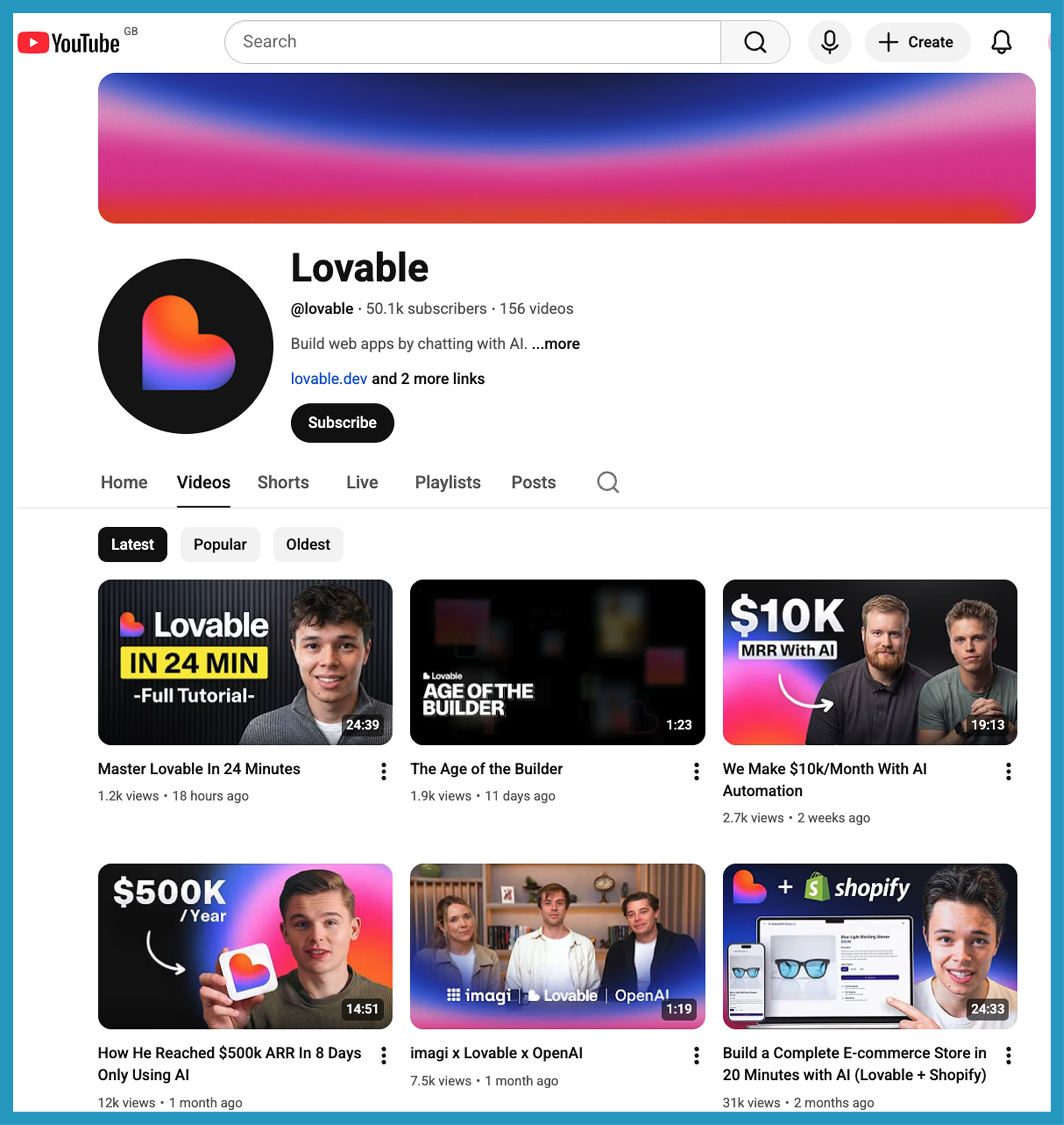
They’ve got how-to videos with partners (”Build a complete e-commerce store in 20 minutes with AI”), tool tutorials, founder case studies with storytelling angles (”we make $10k/month with AI automation”), short product videos used for ads, and clips from longer interviews.
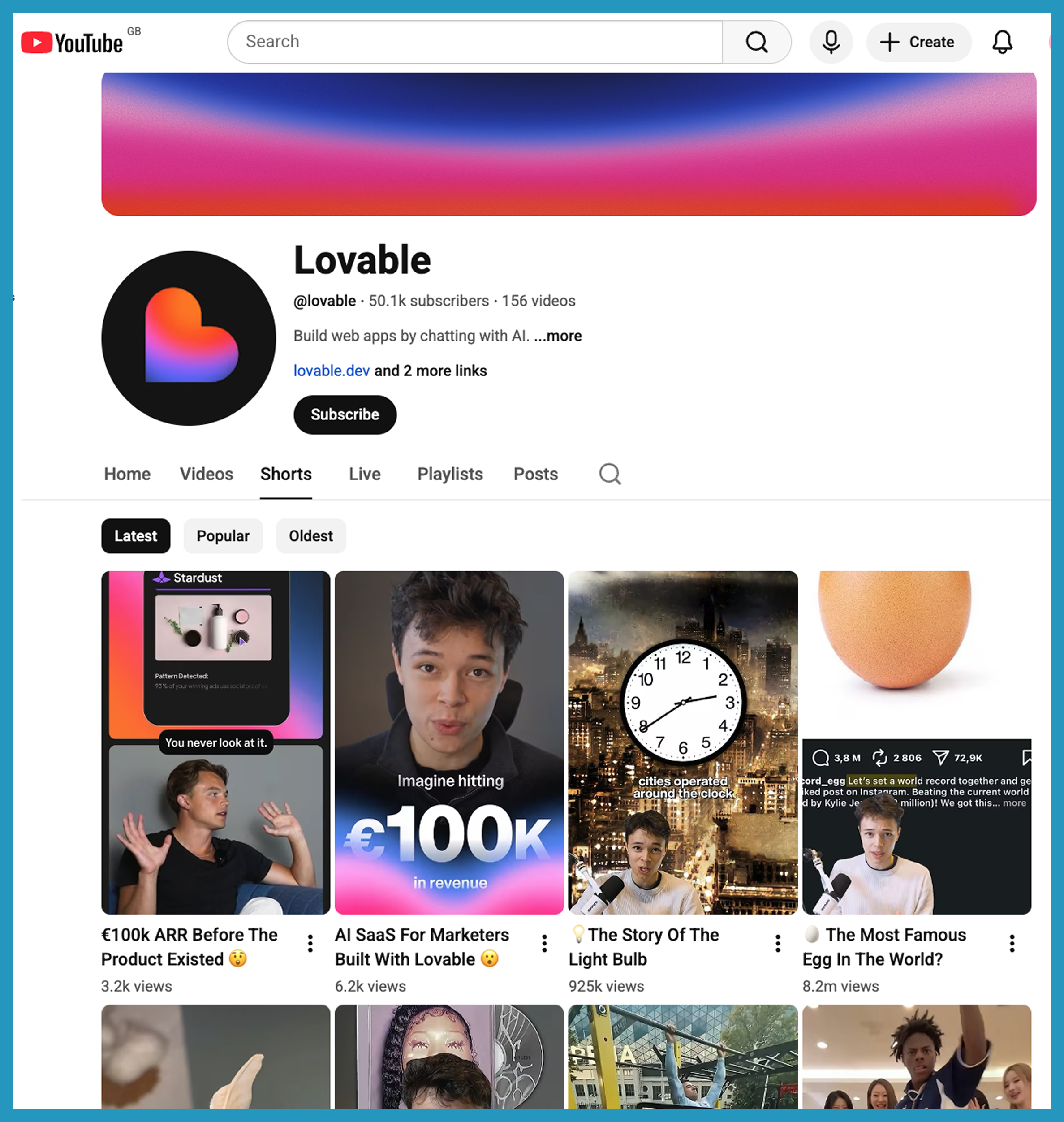
But one aspect that particularly caught my attention is their YouTube Shorts series on tech developments.
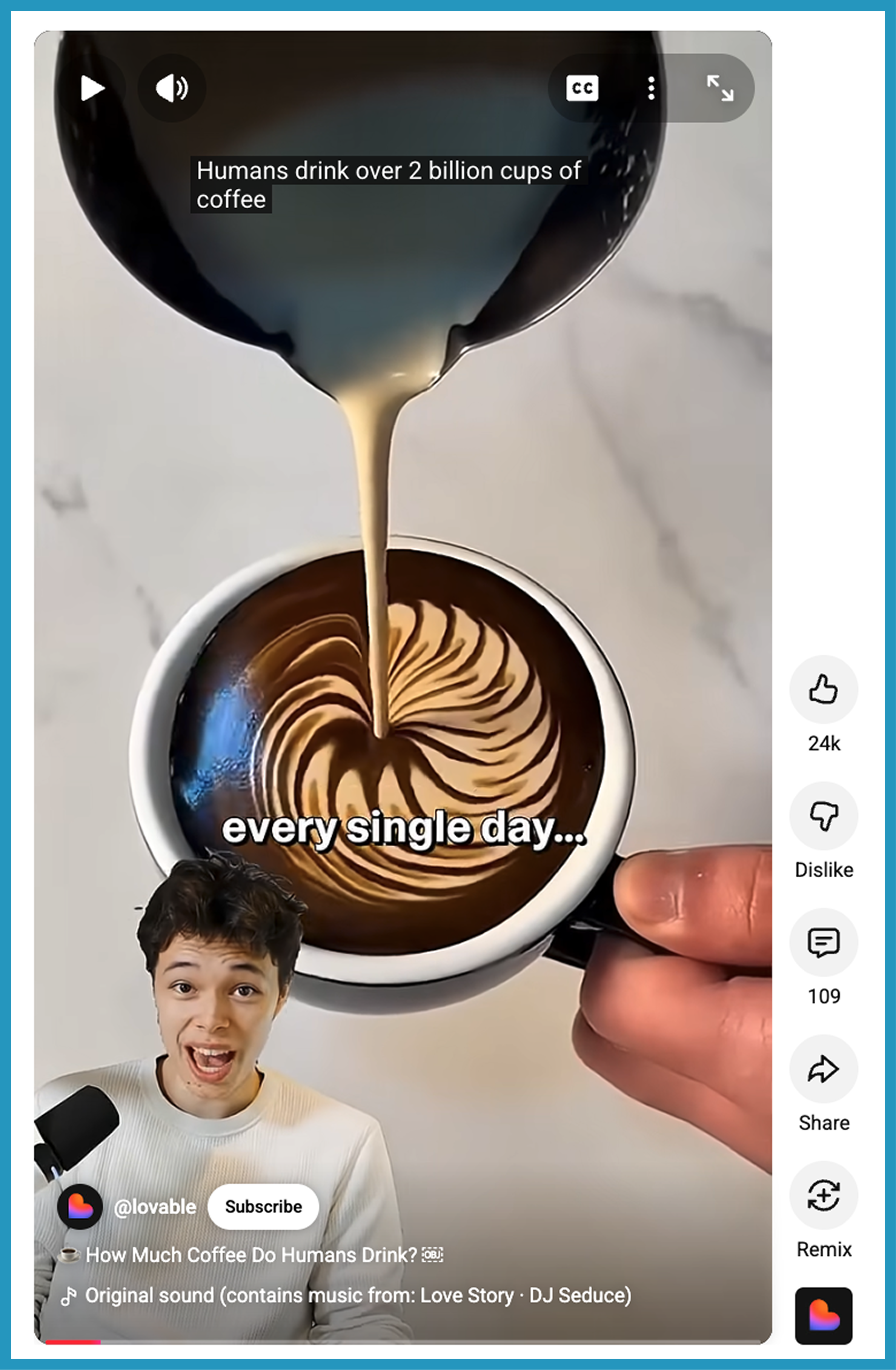
The format: share a fascinating fact about technological scale, explain the tech that made it possible, then draw the parallel to what’s happening with development today.
Example 1: “How much coffee do humans drink?” – 13 million views
The story:
Humans drink over 2 billion cups of coffee daily.
Here’s the tech that makes that possible.
The same thing is happening right now with design – using Lovable.
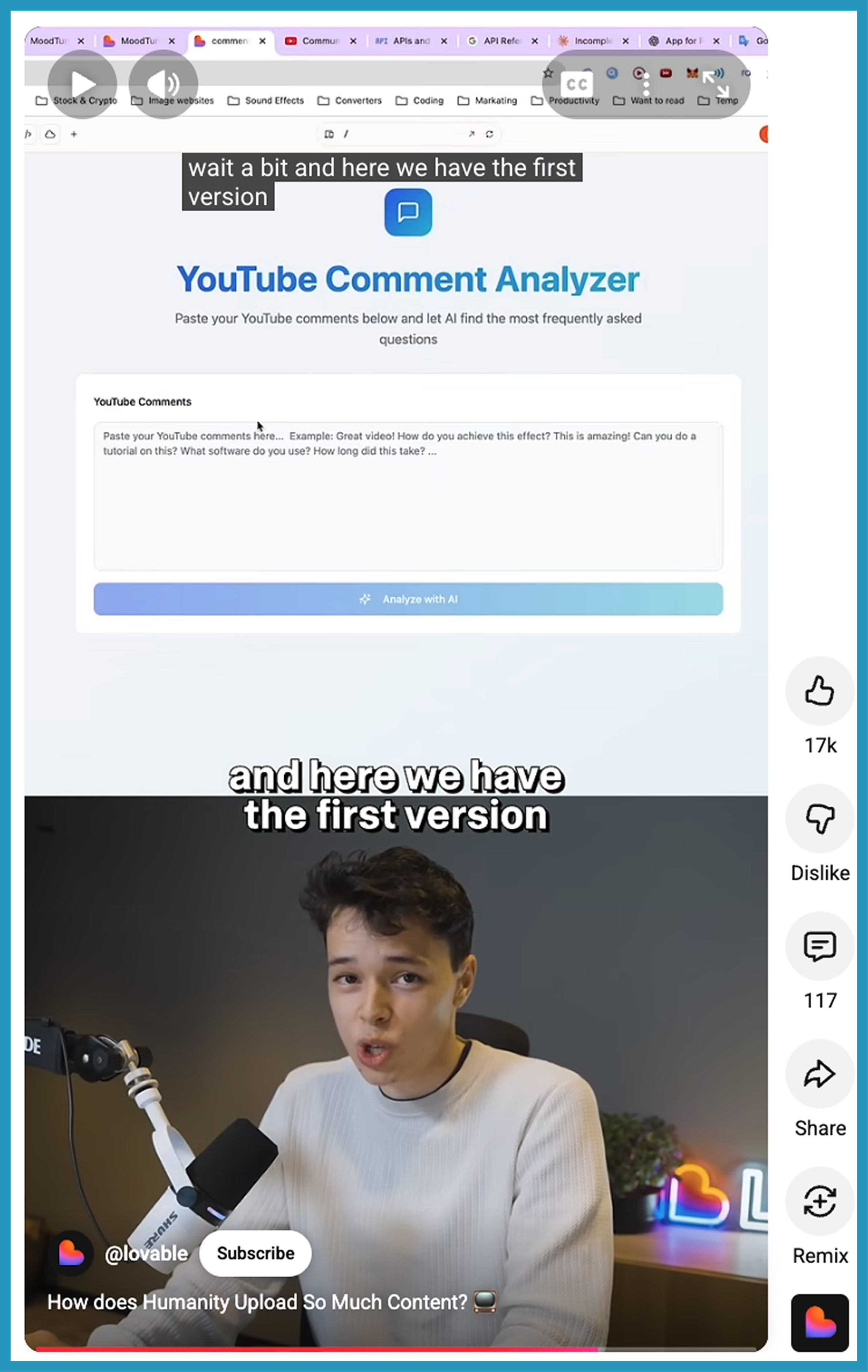
Example 2: “How does humanity upload so much content?” – 6.3 million views
The story:
Creators upload 720,000 hours of YouTube content per day.
Tech made that possible – moving from complex camera crews to a mobile phone in your bedroom.
That’s exactly what’s happening with development today with Lovable.
Here’s an example (shows YouTube comment analyser being built).
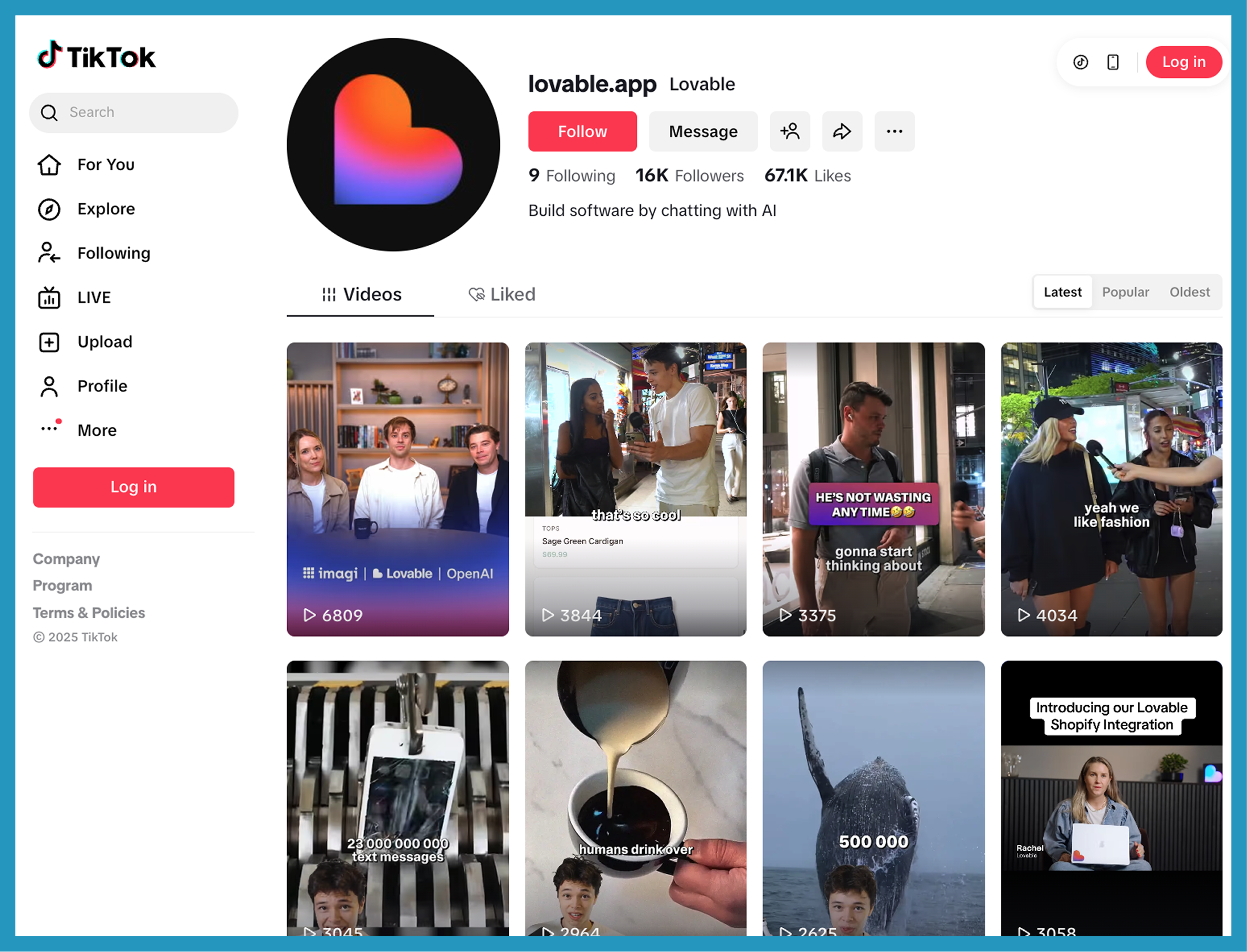
All this content of course lives on TikTok too – they’re cross-posting to maximise reach.
Why it works:
It’s designed for YouTube, not repurposed for it. Short snappy content, intriguing titles and thumbnails, fast-paced editing, a presenter who feels like a YouTuber, not a brand spokesperson. Lovable’s content aligns with what actually performs on YouTube Shorts, TikTok, Instagram Reels – just because we’re B2B doesn’t mean what engages people on short-form platforms changes.
Top-of-funnel entertainment leads naturally into product. The first 15 seconds don’t feel like branded content at all – you’re learning about coffee consumption or content creation. Then it transitions into Lovable’s value proposition in a way that still feels engaging because they’re showing something being built (like the YouTube comment analyser), not just talking about features.
It’s creative in a way that makes sense. My first thought on seeing the coffee clip was “why is Lovable doing Shorts about coffee facts?” – but the connection is instant once you watch. They’ve thought creatively about the stories that relate to their brand positioning (the next era of tech development), and identified that facts, history, and technological development stories work well in short format, and presumably resonate with their builder-type persona too.
They found a format that works, and they’re repeating it. You can see their experiments over the past year – street interviews, product demos (”how to do X with Lovable”), rebuilding trending things like the game 2048. Some performed well, others less so. Then they hit on the tech development facts format. The first one, “This technique is 4000 years old,” got 24 million views. From there, they doubled down. They still post street interviews and interview clips occasionally, but you can see the focus shifting to what’s actually working.
What this content example made me reflect on:
In B2B content we often think of short-form video as repurposing – chopping up webinars or longer videos into clips. That’s useful, but with so much content consumed short-form first today, are we missing opportunities to create specifically for those platforms?
What short-form content formats work well that contextually relate to what we do? For Lovable, it’s history and tech facts. What’s our version?
What would we need to invest in to match what actually works for the platforms we distribute on? YouTube equipment, thumbnail design, learning from native YouTubers and Tiktokers what titles and formats actually work.
Kudos to the Lovable team for this one 👏
And if you’ve come across any other great examples of B2B video content, let me know in the comments, I’m all ears.
Speak soon,
Your content friend Tabitha
P.S. If you found this useful, please share it with a fellow content marketer. Word of mouth is how we grow this little community