
When B2B marketing feels like finding your old Game Boy at the back of a drawer: Qwilr Quest
Content Ideas Issue #22 | One standout B2B content marketing example each edition

Hey content friends,
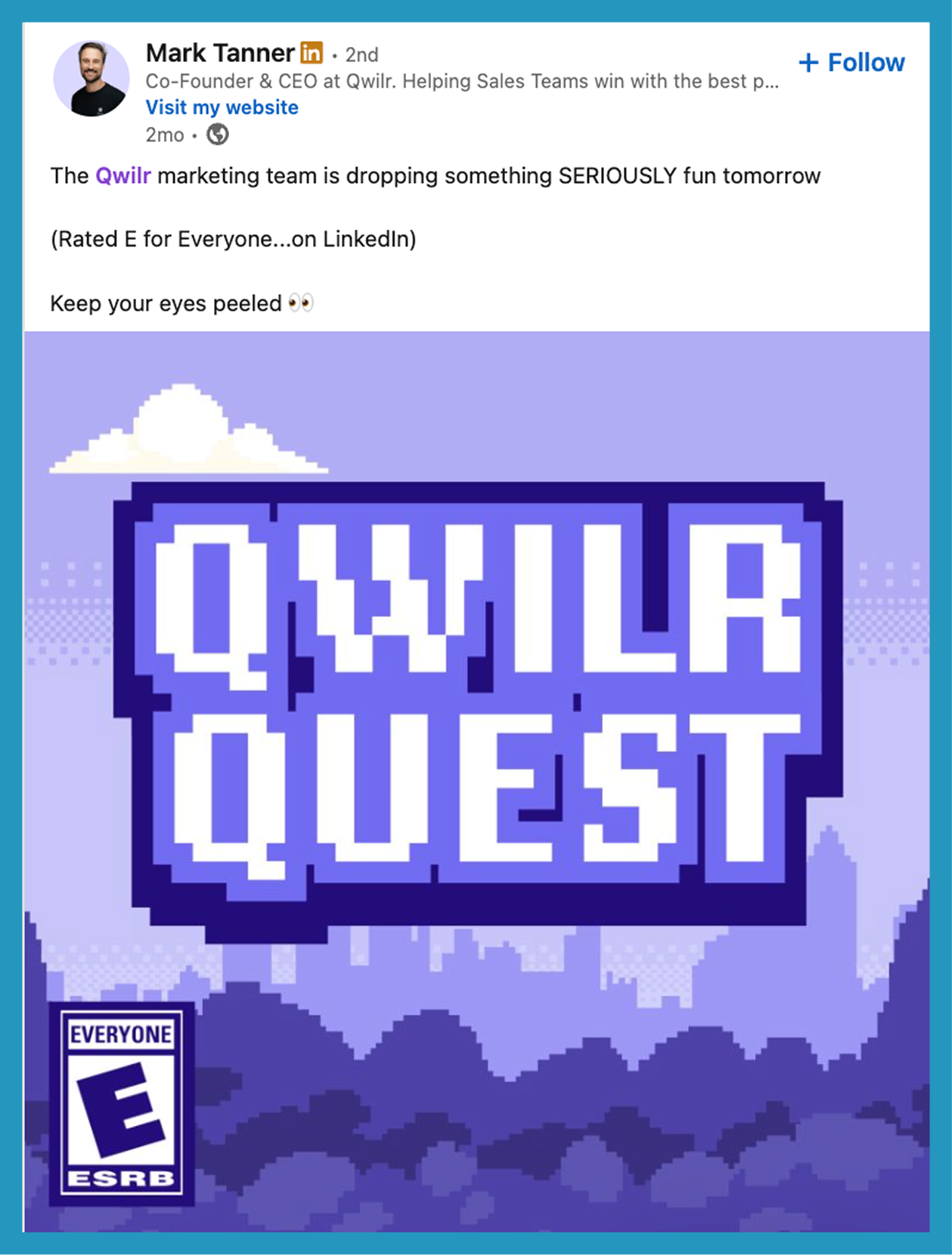
Earlier this year, sales proposal software company Qwilr launched a game.
Not as part of their product, just a fun, 8-bit arcade game that pulls in your LinkedIn profile and turns your career history into a playable quest.
Submit your LinkedIn URL, hit play, and watch your career unfold level by level – every job a new stage, every promotion a power-up.
When I played it, I got a proper little jolt of nostalgia when the first level loaded up and announced “new job: Oxford University Press”.
It was all over LinkedIn for weeks because it’s designed to be sharable – people posting their scores, tagging colleagues, saying “you have to try this.”
And it’s our example for this edition of Content Ideas. Let’s dive in and take a closer look.
What they did:
Qwilr is a sales proposal tool, helping commercial and sales teams create visually impressive, interactive proposals rather than sending static PDFs. Their core audience is sales and marketing teams.
Earlier this year, the Qwilr team built an 8-bit arcade game about your career: Qwilr Quest.
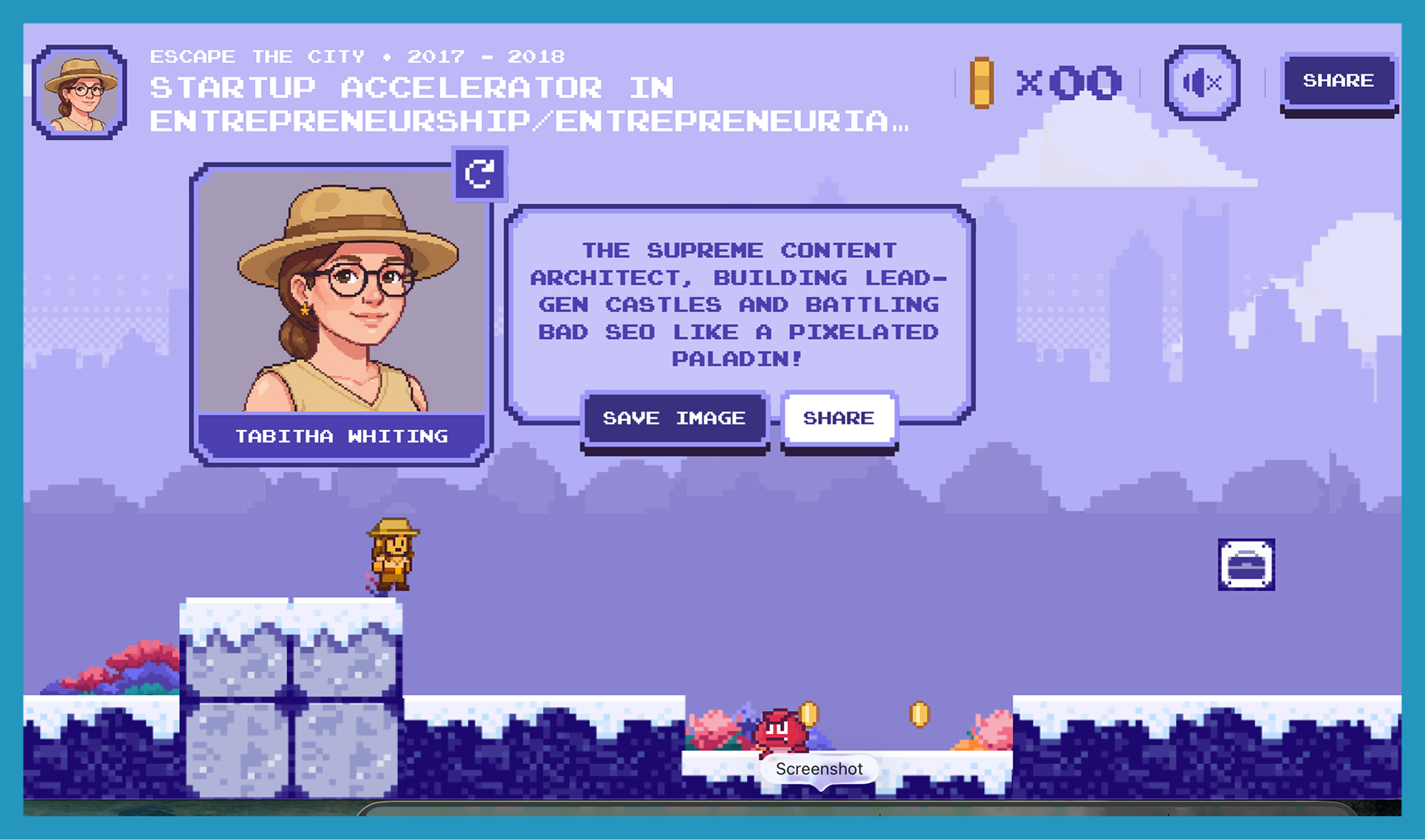
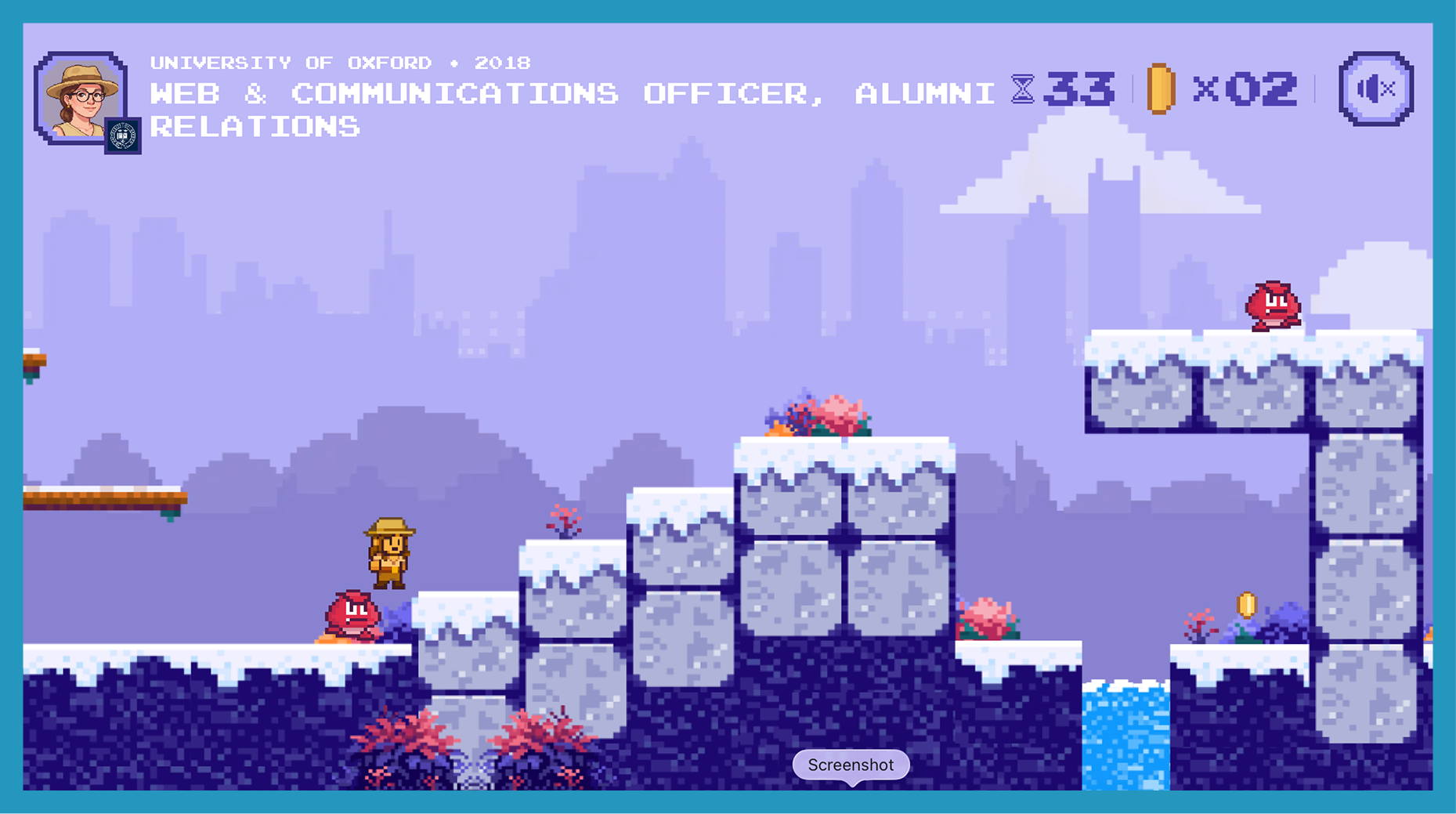
You hand over your LinkedIn URL, and the game pulls your career history and transforms it into a retro 8-bit side-scroller arcade game.
Each job you’ve had becomes a level, and you move through your own professional history – collecting briefcases, levelling up, watching your career play out as you go.
The whole thing takes about two minutes to play.
There’s no form to fill in to get access and no CTA at the end asking you to sign up for something – as far as I can tell, no hidden agendas at all.
You just play it, feel oddly nostalgic about your first post-uni job in 2015, and then share it because you want your colleagues to experience the same thing.
Why it works:
Entertainment is underrated as a content aim. Qwilr Quest isn’t trying to educate anyone or move them down a funnel (or at least, not as far as I can tell). It’s trying to be fun and sharable, and it succeeds. Entertainment is a content decision that requires real conviction to get signed off – but absolutely works.
They built shareability into the mechanics. A B2B software company made a fun arcade game, which is novel enough on its own to be worth posting about. Then there’s the personal angle on top of that – seeing your own career history in pixel form makes it even more shareworthy. And then Qwilr stacked a high score competition on top, with a physical prize for winners: a branded retro game cartridge, the kind you’d recognise from a Game Boy or Nintendo. So people had a reason to keep playing, post their scores, and want to win something tangible. So it’s unsurprising that Qwilr Quest was all over LinkedIn for weeks.
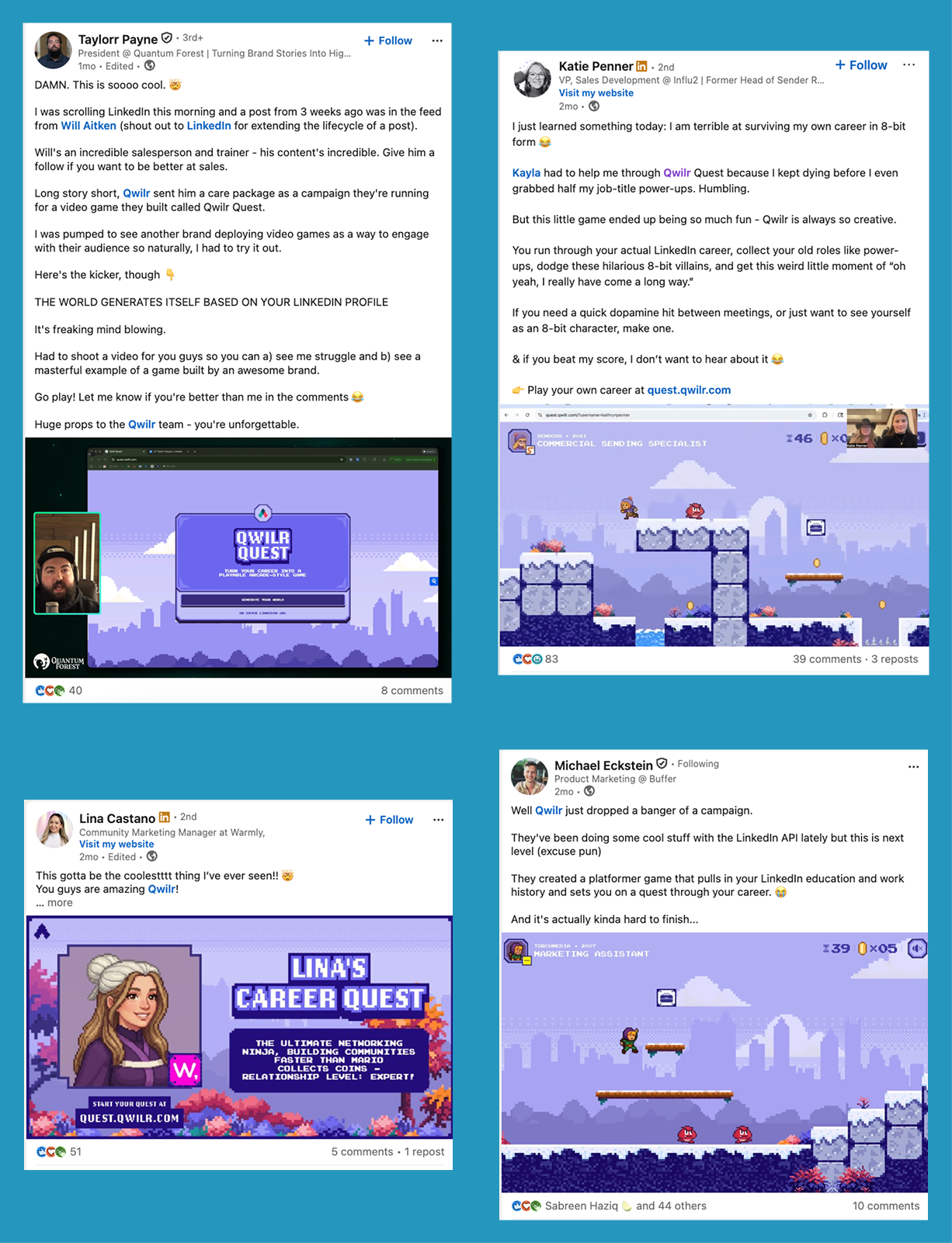
This creativity is part of a pattern, not a one-off. Qwilr Quest is one example of a company that has decided bold, creative, unexpected campaigns are just how they want to show up to their audience – one LinkedIn commenter noted that Qwilr “really doesn’t miss” and pointed to previous campaigns including a March Madness bracket for ops teams and turning people into trading cards. This creativity has become what Qwilr are known for, and that builds brand affinity in a way that product launches and white papers never will.
There’s sharp audience knowledge underneath the fun of it. For Qwilr’s audience of largely millennial sales and marketing people, watching your career play out in the look and feel of childhood gaming taps into nostalgia. And building it around a LinkedIn profile works too, because sales and marketers live on LinkedIn for networking, prospecting, managing profiles. A game built around your LinkedIn profile was always going to land with an audience who think about their LinkedIn profile more than most.
It reflects what Qwilr’s product actually does too. Qwilr’s product is about creating impressive, interactive experiences that stand out rather than blending in. Qwilr Quest is that, applied to their own marketing. And for an audience of sales and marketing people who care about creative quality, building something this polished and playful says more about what Qwilr is capable of than a product demo ever could.
What this example made me reflect on:
Where could we create something our audience would share purely because it’s enjoyable?
What do we know about how our audience actually spends their time, and are we using that creatively enough?
Are we building anything that demonstrates what our product does just by existing, rather than having to explain it?
Kudos to the Qwilr marketing team for this one 👏
What content examples have caught your attention lately? Hit reply and let me know – I’m always on the lookout for the most creative, unique, inspirational examples to cover.
Speak soon,
Your content friend,
Tabitha
P.S. If you found this useful, please share it with a fellow content marketer. Word of mouth is how we grow this little community 🫶