
When publishing everyone’s salary builds your brand: Buffer’s salary transparency content
Content Ideas Issue #20 | One standout B2B content marketing example each edition

Hey content friends,
Walk through most B2B company blogs and you’ll find content about their product, their industry, their space – social media tips, scheduling best practices, analytics guides.
Buffer has all that.
But their most memorable content isn’t about social media management.
It’s about salary transparency.
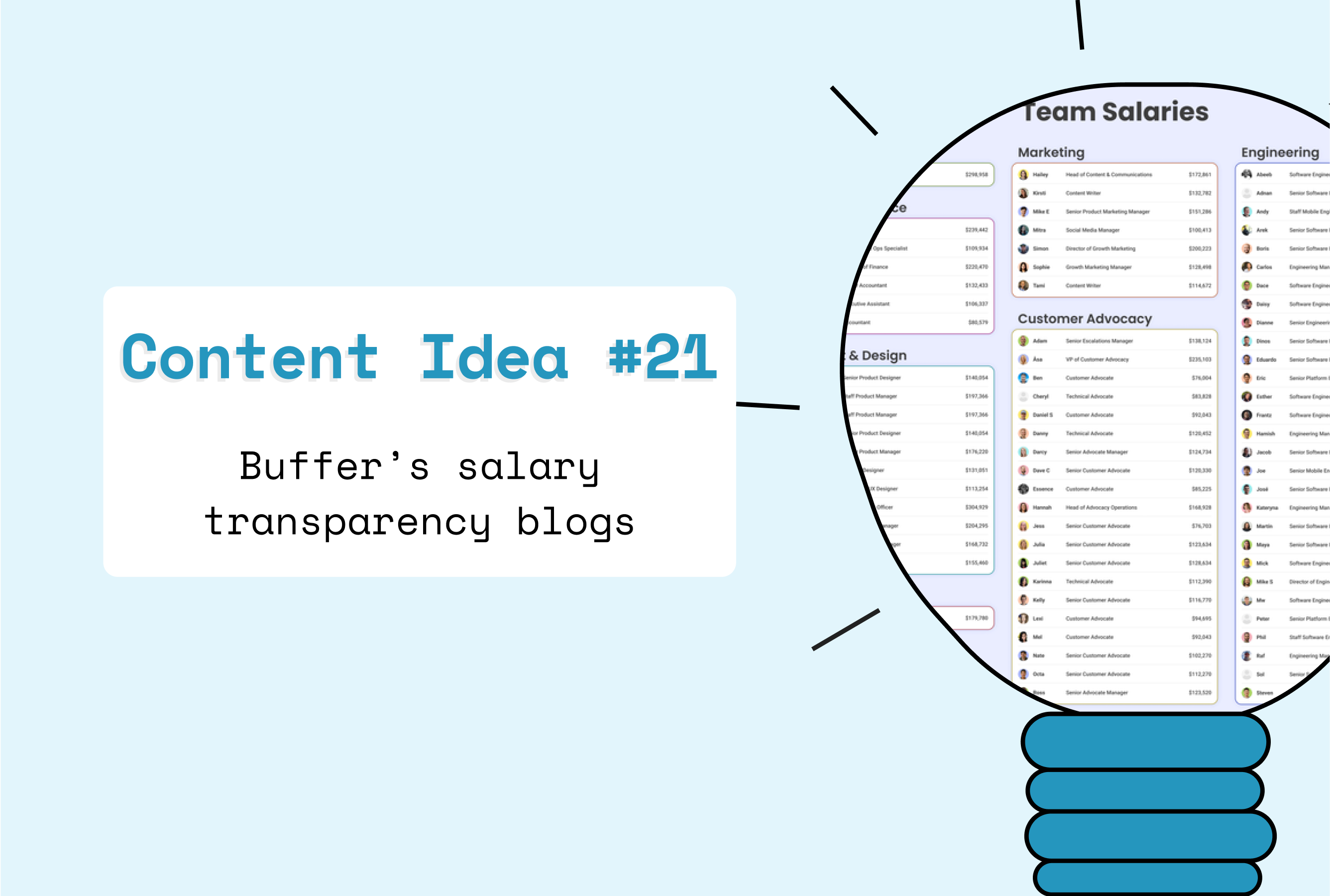
Buffer publishes every employee’s salary on an ‘Open’ hub alongside company finances, revenue projections, and company handbook.
And CEO Joel Gascoigne has written several exhaustive blog posts explaining the thinking behind it all over the life of the company.
His latest is an 8,000-word deep dive on how their salary system evolved over a decade, complete with spreadsheets, formulas, market data sources, and the mistakes they made along the way.
This reads like employer branding at first – and it’s definitely true that job candidates love this level of transparency (and the generosity of the salaries).
But employer branding doesn’t stay contained – it shapes how everyone perceives the company.
When potential customers see Buffer treating their team this way, they understand the values driving the company.
That openness and fairness becomes part of the brand story, whether you’re considering working there or just choosing a social media tool.
Let’s dive in.
Content Ideas: Buffer’s salary transparency blogs
What they did:
Buffer is a social media scheduling and management tool for creators, small businesses, and marketers.
Since 2013, they’ve operated as an “open company” – sharing aspects of their business that most companies keep private.
This lives on their Open hub, where you can view:
Every employee’s individual salary (including the CEO’s)
Company finances and revenue projections
Their product roadmap
Their complete company handbook
What the team is currently reading.
And more.
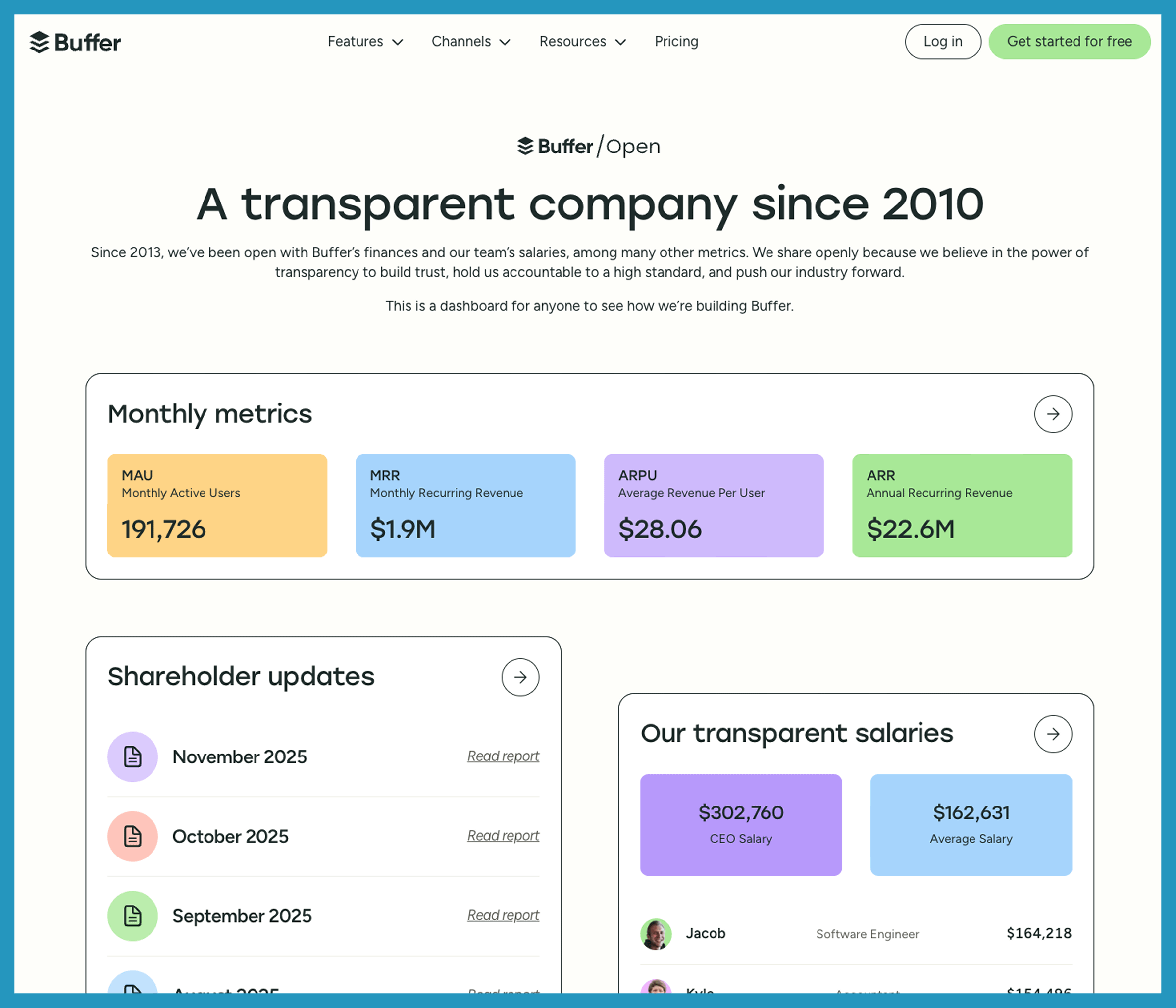
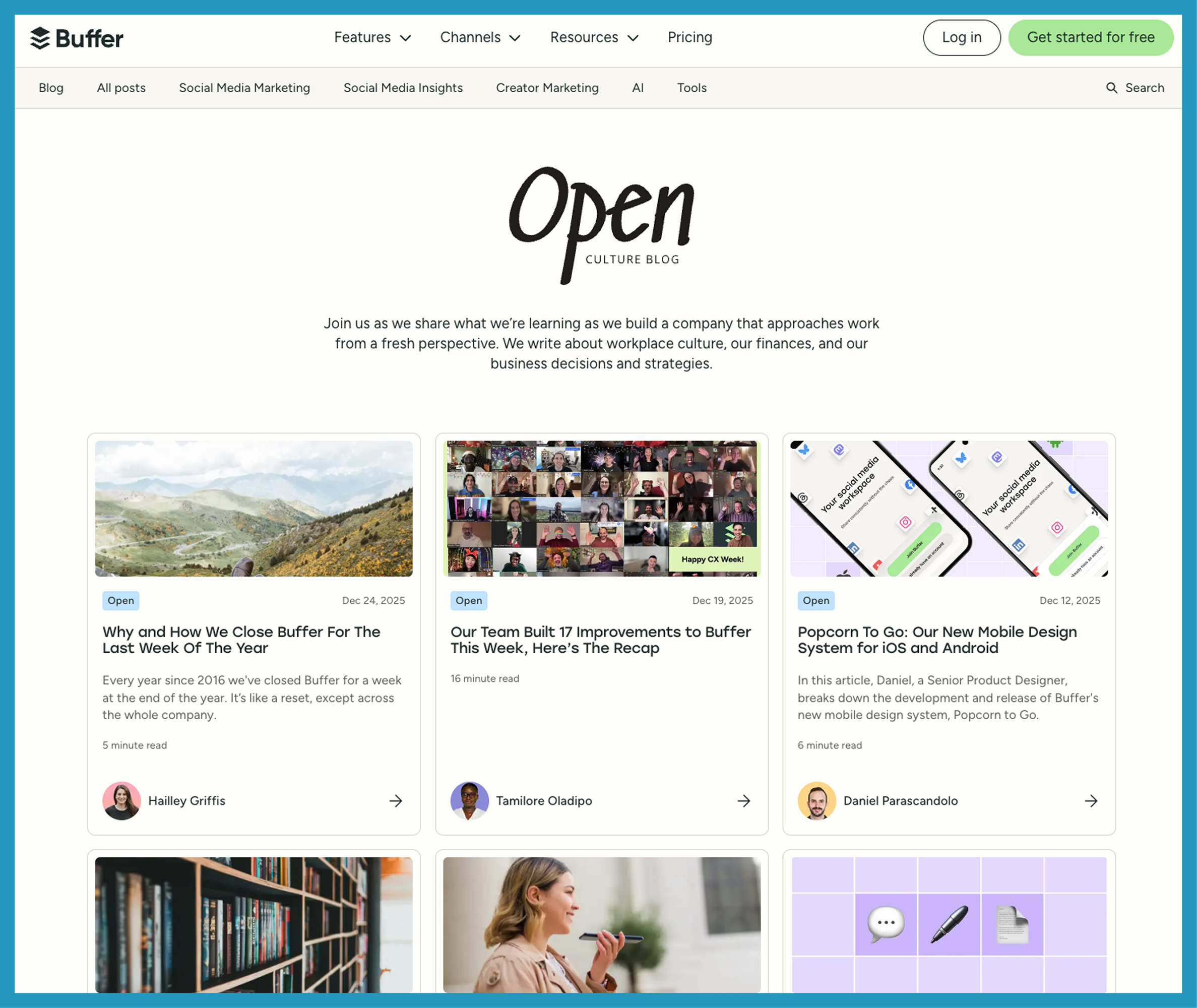
But the real content goldmine is the blog series explaining the thinking behind all of it – as part of their ‘Open blog’, where they share the behind-the-scenes on business thinking overall.
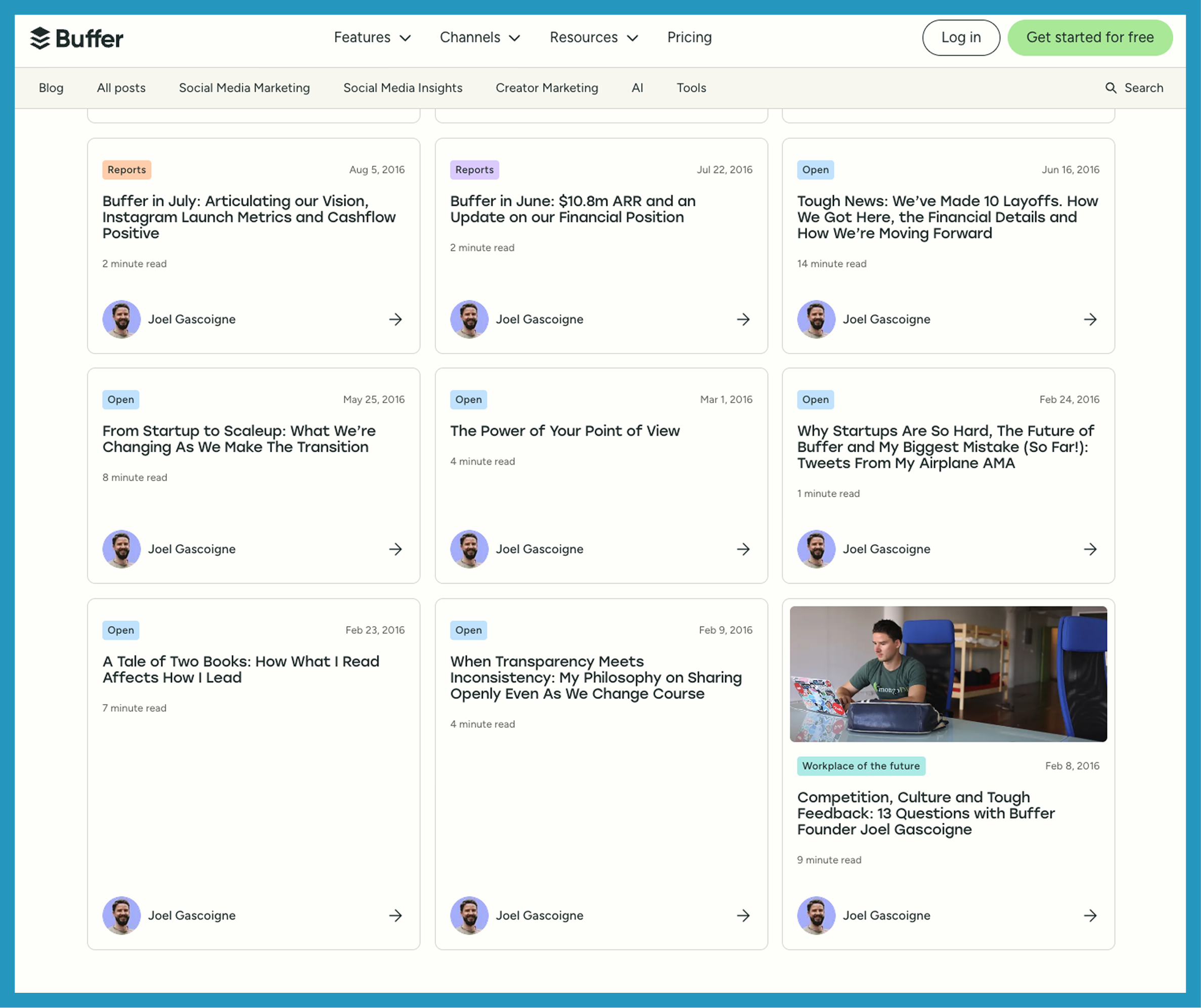
CEO Joel Gascoigne has written extensively about their approach to salaries over the past decade on the Open blog – not corporate company PR announcements, but detailed explainers written personally by him.
The latest example is an 8,000-word piece titled “Introducing our Open Salary System: Reflecting on a Decade of Transparent Salaries at Buffer.”
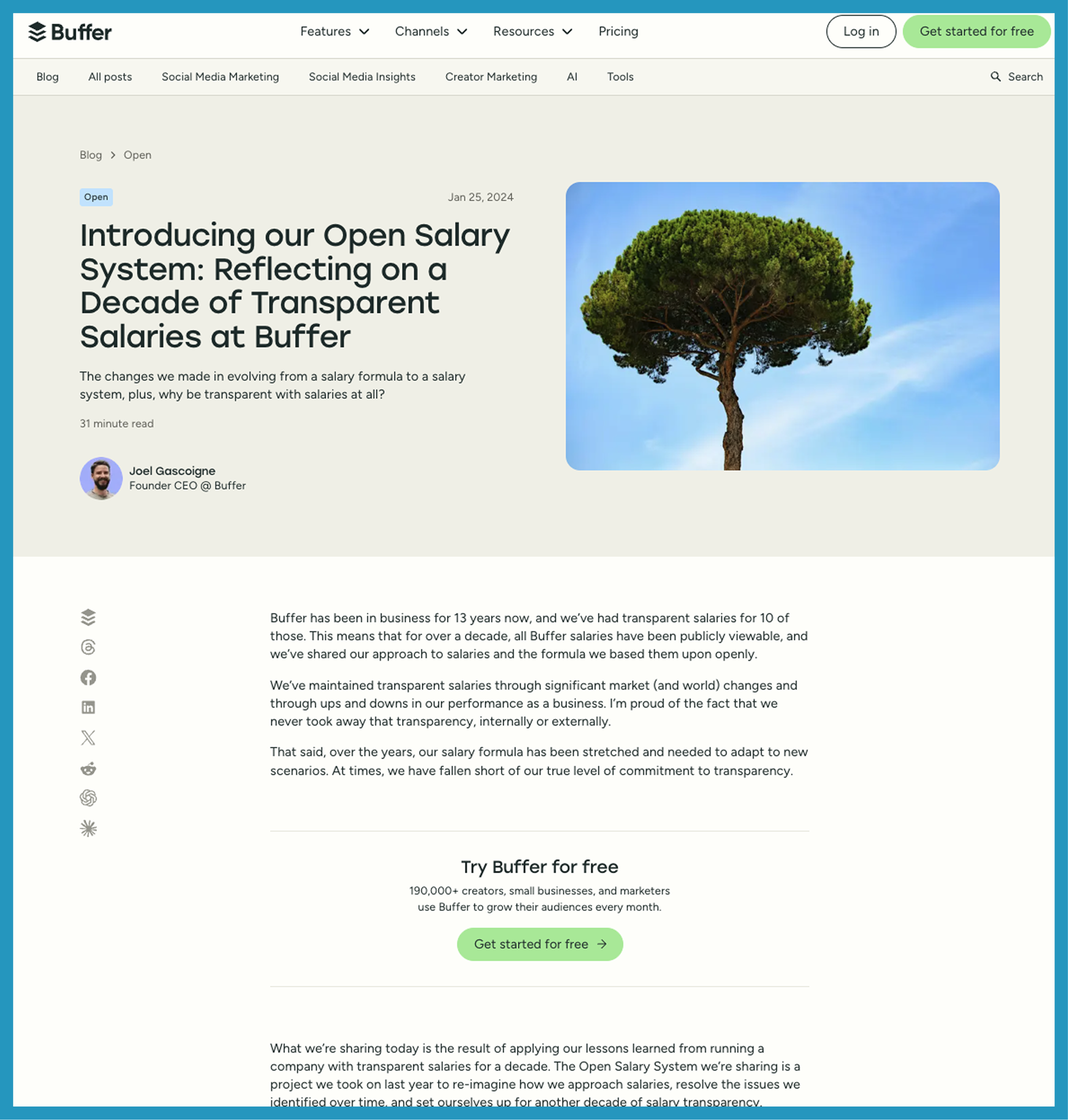
It walks through:
How their salary approach evolved from formula to system over 10 years
Why they chose specific market data sources to benchmark pay with
The details on exact percentiles they use for different roles
How they handle location bands and cost of living
The mistake they made in 2022 when they broke their own formula by hiring someone at the wrong level/location band
The systematic changes they implemented to prevent it happening again
Links to the actual spreadsheets used to calculate salaries.
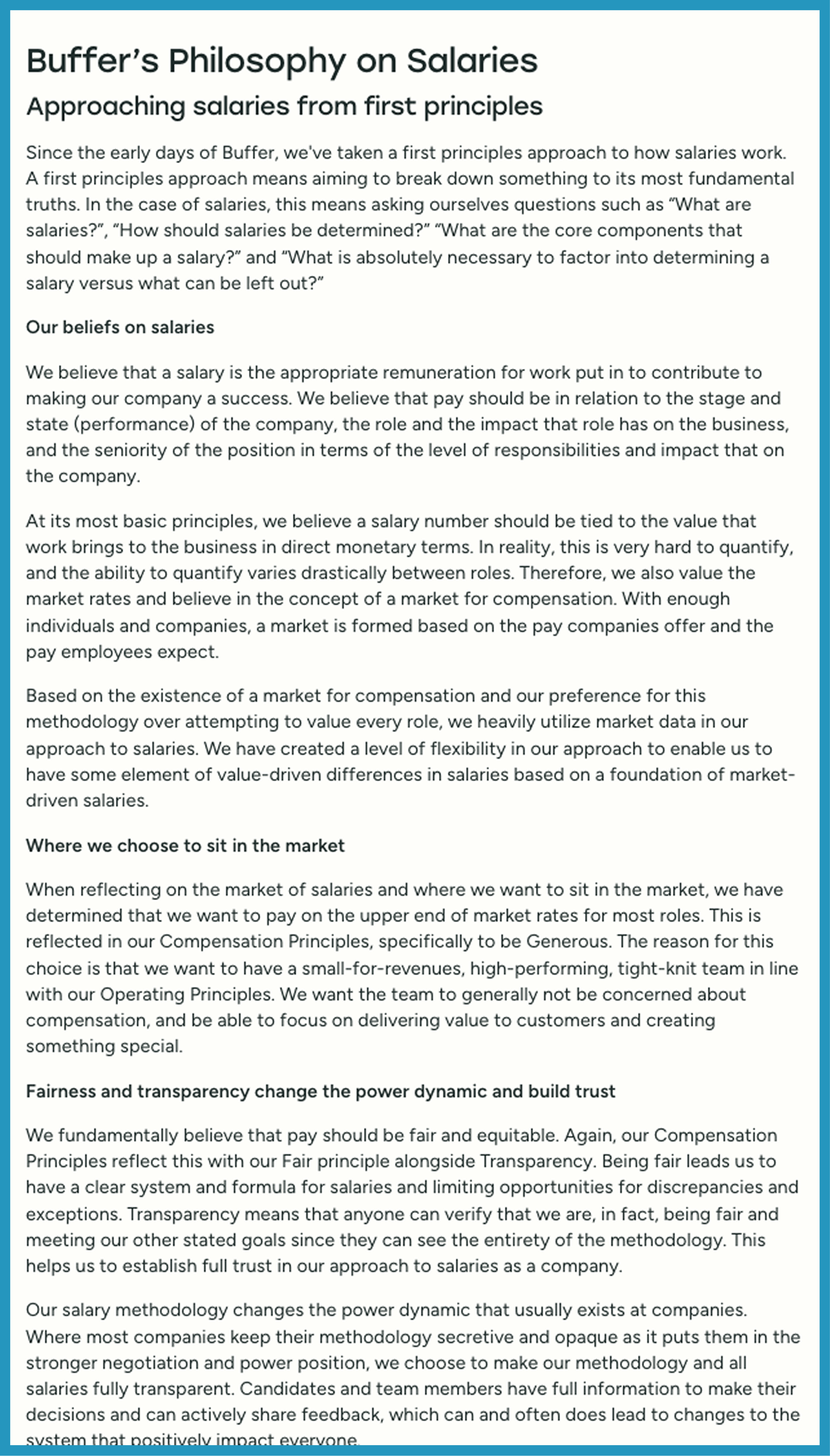
It’s vastly more detail than most companies ever give their employees on how their salary was decided – even behind closed doors, let alone in the public eye – as you can tell from a glance at this section on their overarching principles.
Other blogs in the series include pieces on why they increase salaries every year to match market rates, and their vision for location-independent salaries.
What makes it a great content marketing example to learn from:
Strong opinions demonstrated, not claimed. Many companies say they value transparency, but just list it in their token ‘company values’ section on their careers page. Buffer proves it by publishing individual salaries and the exact formulas, and sharing the detailed thinking behind it. This is what actual thought leadership looks like – strong opinions that go against conventional actions, with clear explanations about why those opinions are held.
They’re teaching, not just telling. Buffer could publish the salary numbers and call it a day. Instead, they write comprehensive guides on the behind-the-scenes processes that go into making those salaries public. It’s genuinely educational – you could implement your own compensation system from these blogs. That generosity transforms company news into thought leadership people actually reference and return to.
Building in public before it was a tactic. Joel’s been writing about Buffer’s approach to openness since 2013. Now “founder-led content” and “building in public” are everywhere as marketing tactics. Buffer was just doing it because they believed in it. That authenticity – and maintaining it through market changes and company struggles for over a decade – is what makes it credible.
Employer branding is brand building. At face value, this is employer branding: job candidates see this transparency and want to work there. But it’s more than that – because employer branding shapes how everyone perceives your company. When potential customers see how Buffer treats their team, it signals the company’s core values. That openness, that fairness, that commitment to principles – those associations follow through to overall brand perception. You understand what Buffer stands for. You respect what they’re doing. It becomes a brand you want to be associated with, whether you’re applying for a job or choosing a social media tool.
Company operations as universal content. Compensation isn’t Buffer’s product – social media scheduling is. But everyone works. Everyone has a salary. Everyone cares about fairness in pay. Buffer found the overlap between what they do internally and what resonates universally. Not everything internal makes interesting external content, but this does.
What this example made me reflect on:
What strong beliefs do we hold that we could prove through action rather than just claim in our content?
Where could we share our thinking on hard problems in a way that’s genuinely educational and useful to others, not just promotional?
What aspects of how we operate internally would resonate with our audience’s universal experiences, even if they’re not directly about our product? Are we willing to share the messy iterations and mistakes, not just the polished outcomes?
Kudos to the Buffer team for this one 👏
P.S. If you’re curious about all the details on how Buffer’s compensation approach works, I wrote about it a while back for Ravio’s Compensation Stories series.
What content examples have caught your attention lately? Hit reply and let me know – I’m always on the lookout for the most creative, unique, inspirational examples to cover.
Speak soon,
Your content friend, Tabitha.
P.S. If you found this useful, please share it with a fellow content marketer. Word of mouth is how we grow this little community 🫶